|
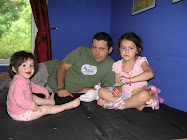
| Guess which one is Colin Bateman |
....
For the last year or two here on my blog I've been trying to get people interested in my books in particular and in Irish crime writing in general. It's sometimes been an uphill struggle because, compared to Nordic or English crime fiction, Irish crime writers still seem to lurk in the periphery. This is strange to me because in terms of quality and diversity Irish crime fiction is booming. I wonder if Ireland has an image problem: years of insidious and dreary cliches in what I like to call Micksploitation films have conditioned the book buying public to demand fiction that conforms to their expectations. When people think of Ireland they still think of smoky pubs, flat caps and sheep; they want their Ireland to be the Ireland of the 1950's. Working in a New York Barnes and Noble I discovered that Irish Americans are not particularly avid readers and when they do buy books it's often something ghastly thing like How The Irish Saved Civilization or The Best Irish Castles. Therefore if you want to sell books with an Irish theme in America you have to reach beyond the Irish American community but there again you are often hit by the stereotypes and imagery of what it means to be Irish. When the average American punter buys an English or Nordic mystery novel they think they're getting something that not only will entertain them but will also improve them in some way because Swedes and Englishmen seem so darn intelligent. And this I feel appeals to something deep in the American psyche - the need to better oneself.
...
Irish fiction is intellectually on a par with any other literature in the world and I'd go further and say that Irish crime writing currently leads the world in diversity and richness. That such a small island can produce such a welter of talent is truly amazing. On his blog, Crime Always Pays, Declan Burke tirelessly promotes his fellow Micks and although I am not as well read as Declan, here are few authors that I have read in the last couple of years that I think you should be aware of...who knows it might even help with some last minute Christmas shopping.
...
*Declan Burke: Dec's novel Absolute Zero Cool may be his masterpiece. Channeling Flann O'Brien Dec has an original and utterly brilliant take on the contemporary crime novel. His latest Slaughter's Hound was one of the best Irish crime novels of the year.
*Stuart Neville: Stuart's first novel The Twelve was a work of brilliance. Incredibly his follow up books have only gotten better. Don't let the beard fool you, he's just a kid really, and he's got a long promising career ahead of him. I finished Ratlines last week and can vouch for it as an amazing book
*Eoin McNamee: Perhaps the most intelligent and thoughtful of this generation's crop of Irish novelists. At home in literary fiction and crime fiction, Eoin's book Orchid Blue is one of my all time favourites.
*Ken Bruen: Sir Ken of Bruen is The Man as far as I'm concerned. The Irish Elmore Leonard or possibly the Irish Michael Connolly, but, you know, funnier. He's done many wonderful books since but there's a soft spot in my heart for Her Last Call To Louis MacNeice, one of his early classics.
*Ronan Bennett: This generation's Graham Greene. As comfortable in film and television as he is in fiction. Havoc In The Third Year is one of the great novels of our time and it should have won the Booker Prize.
*Ronan Bennett: This generation's Graham Greene. As comfortable in film and television as he is in fiction. Havoc In The Third Year is one of the great novels of our time and it should have won the Booker Prize.
*Garbhan Downey: The bard of Derry. Garv hilariously unpacks the foibles and fantasies of the denizens of Ireland's most eccentric city. My favourite? War of the Blue Noses.
*Kevin McCarthy: Only got to one Kevin McCarthy book so far but that was the fantastic novel Peeler. Definitely one of those books that you'll read compulsively in one long sitting.
*Kevin McCarthy: Only got to one Kevin McCarthy book so far but that was the fantastic novel Peeler. Definitely one of those books that you'll read compulsively in one long sitting.
*Colin Bateman: Cursed by a childhood in Ireland's most boring town, Bangor, Bateman rose above the tedium of tea shops and ice cream parlours to become a best selling comic novelist. His done nothing but brilliant work since but I still love Divorcing Jack from a few years back.
*David Park: A thoughtful, intelligent, subtle novelist in the Graham Green/Brian Moore mould. More of a literary guy than a crime guy really. His masterpiece, The Truth Commissioner, is the book to read if you want to understand what happened to Northern Ireland from 1968 - 1998.
*Tana French: I was in a bookshop in Tokyo looking for something to read on the train and in among the Japanese novels was a shelf full of Ms French. I bought, I read, I loved. Now I've read them all and they're all great.
*Ruth Dudley Edwards: A true prose master. Her crime novels are fantastic but for me her book about the Omagh bombing takes us to another level. A must read for anyone who is interested in contemporary Ireland.
*Brian McGilloway: You all know Brian don't you? One of the brightest lights in all of Irish literature. Intelligent and tough with a poet's heart, he's a best seller in the UK and Ireland and he's increasingly huge in America. If you don't have a BMCG book go get one, now!
*John Connolly: How do you crack America? Well, if Alex Barclay and Stuart Neville are the Kinks and the Stones JC is the Beatles. You crack America by writing taut, original, stylish crime fiction with a supernatural bent.
*Gene Kerrigan: I just finished Kerrigan's The Rage and I thought it was amazing. I'll definitely be reading more in the future.
*Dec Hughes: The Wrong Kind of Blood is the first in the great Ed Loy mystery series. Hughes is street wise, smart, witty and just a little bit cocky.
*Gerard Brennan: One of the new generation of N Irish novelists and playwrights. This year I read Brennan's hilarious, tight, brilliant novella The Point. I was lucky enough to get The Wee Rockets in manuscript and I knew it was going to be a hit. It was.
*Alan Glynn: Winterland is one of my favourite books of the last five years. I haven't read Glynn's latest but I surely will.
*Cormac Millar: Only read one CM book, The Grounds, but fortunately it was a fantastic read. Definitely adding more to my TBR pile.
*Arlene Hunt: Also only read one Arlene Hunt novel but luckily that was also pretty damn fine. It was called The Chosen and it was one of my books of the year.
*Alex Barclay: I really enjoyed Barclay's Darkhouse, one of my favourite books of 2010.
*John McFetridge: John is from Montreal but his ancestors are from Larne (God help them!) His novel Tumblin Dice was recently picked by Amazon.ca as one of the best Canadian crime novels of the year. (THE best if you ask me).
...
Like I say, this list is not exhaustive. I'm not as well read as many people in this field, but if I've piqued your curiosity at all investigate the authors above and please check out Crime Always Pays and Detectives Beyond Borders for a more comprehensive look at Irish crime fiction.
*Cormac Millar: Only read one CM book, The Grounds, but fortunately it was a fantastic read. Definitely adding more to my TBR pile.
*Arlene Hunt: Also only read one Arlene Hunt novel but luckily that was also pretty damn fine. It was called The Chosen and it was one of my books of the year.
*Alex Barclay: I really enjoyed Barclay's Darkhouse, one of my favourite books of 2010.
*John McFetridge: John is from Montreal but his ancestors are from Larne (God help them!) His novel Tumblin Dice was recently picked by Amazon.ca as one of the best Canadian crime novels of the year. (THE best if you ask me).
...
Like I say, this list is not exhaustive. I'm not as well read as many people in this field, but if I've piqued your curiosity at all investigate the authors above and please check out Crime Always Pays and Detectives Beyond Borders for a more comprehensive look at Irish crime fiction.


.jpg)